Research
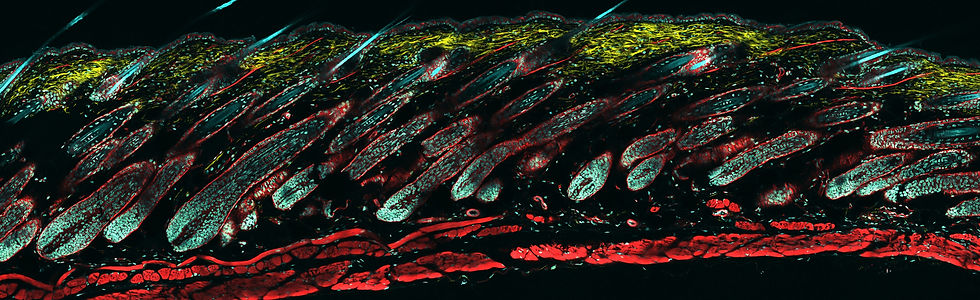
Despite losing and replacing billions of cells every day, our tissues are able to faithfully maintain their architecture, ensuring proper function throughout life (Xin et al., Cell, 2016). How tissue-resident stem cells and their progeny coordinate their behaviors and fate decisions to achieve this remarkable regenerative precision, and how this coordination is disrupted by oncogenic mutations to initiate cancer, are central questions in regenerative and cancer biology. One of the major challenges in addressing these questions is the limited temporal resolution of conventional approaches for studying these highly dynamic processes. Our lab brings together cutting-edge intravital imaging, innovative mouse models, and molecular profiling approaches to overcome this limitation and uncover the cellular and molecular mechanisms that govern tissue regeneration and oncogenesis.
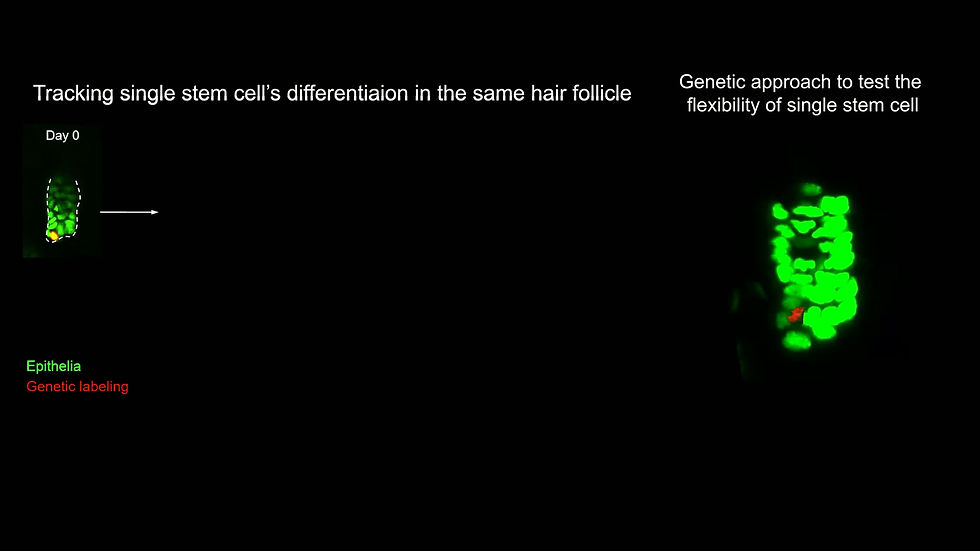
How Individual Stem Cells Coordinate Tissue Regeneration
Faithful regeneration of normal tissue architecture depends on the ability of individual stem cells to dynamically coordinate their behaviors and fate decisions. By combining intravital imaging with genetic approaches, we can longitudinally track and manipulate individual stem cells and their progeny at single-cell resolution in live mice to reveal the mechanisms that orchestrate tissue regeneration (Xin et al., Nat Cell Biol 2018).
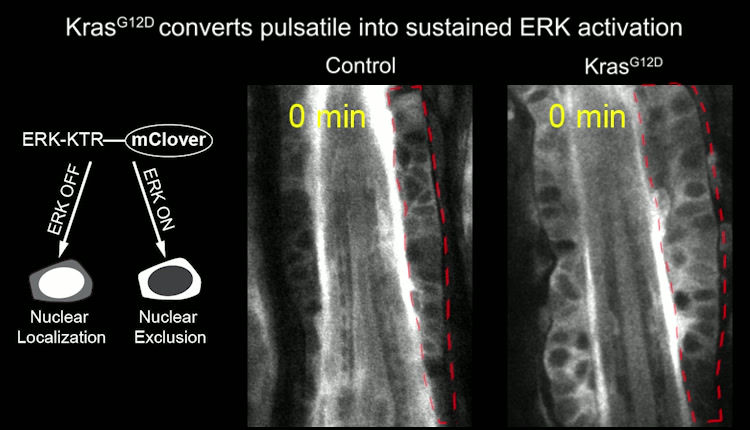
How Signaling Dynamics Govern Tissue Regeneration and Oncogenesis
Cell signaling plays essential roles in coordinating stem cell behaviors to maintain normal tissue function, yet how signaling pathways are dynamically regulated to achieve these functions remains largely unknown in most mammalian tissues. By leveraging innovative genetically encoded signaling reporters, we can visualize signaling dynamics in real time at single-cell resolution in living mice, enabling us to uncover how dynamic signaling regulates tissue regeneration and drives early oncogenesis (Wei et al., Cell Stem Cell 2023; Xin et al., Nat Cell Biol 2024).
How the Microenvironment Shapes Early Oncogenesis
Cancer initiation is highly context dependent, and the tissue microenvironment plays a pivotal role in determining whether oncogenic mutations progress to cancer. Yet, how distinct microenvironments influence the earliest events of oncogenesis remains poorly understood. By tracking early oncogenic events in animal models and integrating these studies with molecular profiling, we seek to uncover the cellular and molecular mechanisms by which microenvironmental factors either permit or restrain cancer initiation.
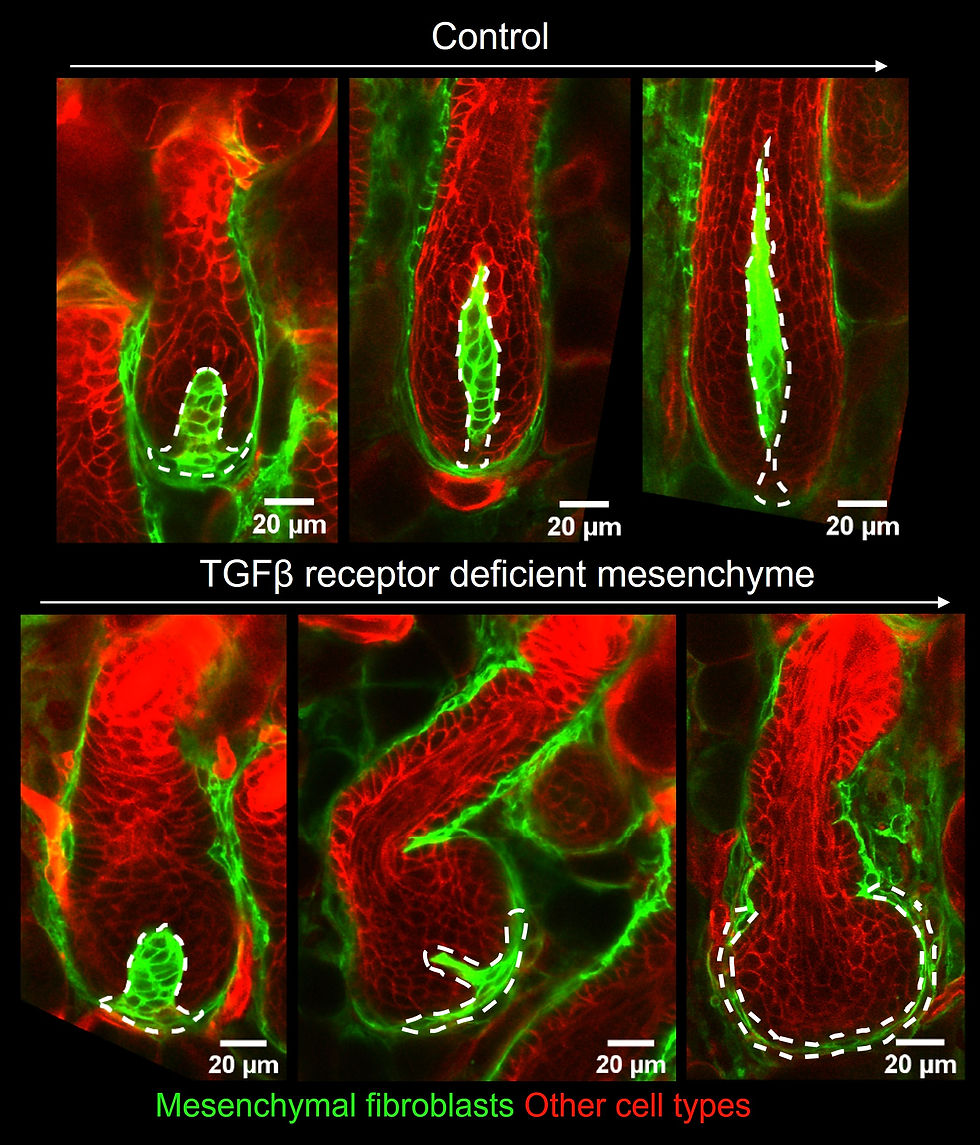
How Mesenchyme Architecture Impacts Epithelial Function
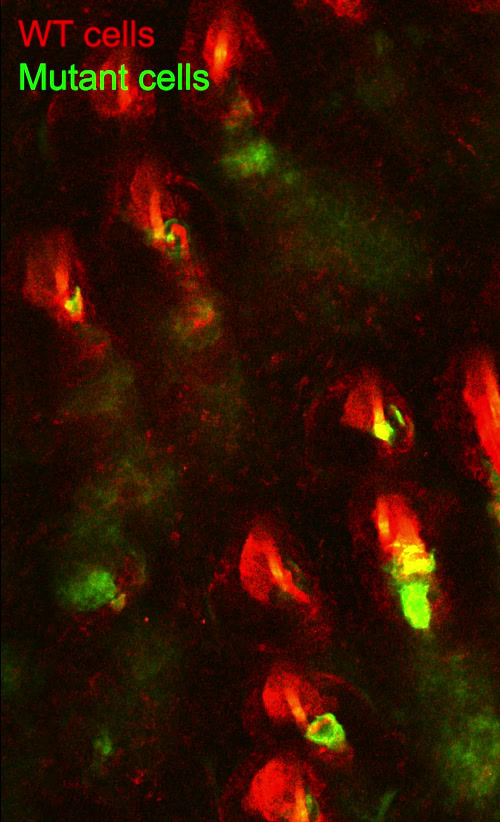
Stem cell behaviors are tightly regulated by their niche, with mesenchyme serving as a key component through signaling and cell- extracellular matrix (ECM) interactions. However, how the mesenchyme modulates stem cell behaviors, and in particular how its three-dimensional architecture influences epithelial function, remains poorly understood. Our recent discovery of an unexpected role for TGFβ signaling in controlling mesenchymal architecture within the hair follicle provides a unique opportunity to address this fundamental question (Wei et al., Cell Stem Cell 2023).